Dortmund's Tactical Challenge Against Hoffenheim
Borussia Dortmund’s transfer business is done. The window is shut, the noise has dipped, and what’s left now is the part that really matters: winning football matches.
They’ve started in stride. Three points on opening day against Hamburg, safe passage in the cup at HEBC, Serhou Guirassy already on the scoresheet. But those were the warm‑up acts. The first real examination of Niko Kovac’s new-look side comes now: Hoffenheim away.
Hoffenheim’s revival meets its first stress test
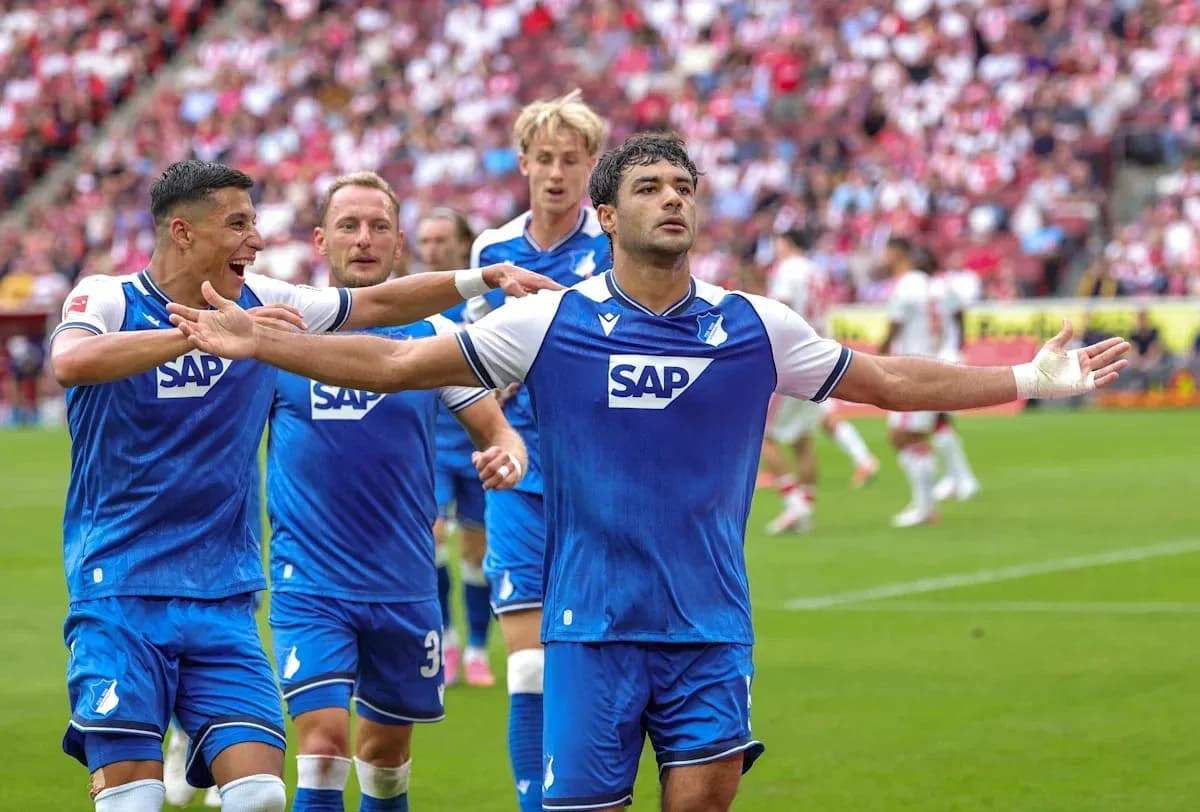
Hoffenheim arrive as far more than awkward hosts. Under Christian Ilzer, they’ve gone from relegation candidates to one of the Bundesliga’s most efficient operators. He walked into a crisis in 24/25, dragged them clear of the drop, then doubled their points tally last season. They finished just a single point off Champions League football.
That kind of surge changes expectations. Survival is no longer the benchmark. Europe is.
The summer complicated things. Bazoumana Toure, their explosive winger, has gone. Fisnik Asllani’s move to RB Leipzig collapsed on medical grounds, and he remains sidelined through injury. Ilzer lost one of his main wide threats and saw a key asset stuck in limbo.
So Hoffenheim went shopping. Patrick Wimmer arrived from Wolfsburg to replace Toure’s dynamism on the flank. Two strikingly named prospects followed: Mats Rots and Nathan De Cat, the latter a two-way midfielder expected to slot into the engine room alongside Wouter Burger. De Cat brings legs, bite and a willingness to cover ground – the kind of profile Ilzer leans on to sustain their high-possession game.
Only Wimmer started in the 2–3 defeat to Köln on the opening weekend, a result that flattered Köln less than it frustrated Hoffenheim. They still saw 59% of the ball, still tried to dictate, but paid for looseness at both ends. With Dortmund in town, Ilzer is unlikely to roll out the same XI. Personnel will change. The idea won’t.
Hoffenheim want the ball. They were fourth in the league for possession last season. They intend to stay there.
Dortmund’s first real dilemma of the season
For Dortmund, this trip is about answers.
The first question is simple: who plays? The solutions are anything but. Konstantelias is out with an ACL injury, Samuele Inacio is suspended, and Kovac must find a new partner for Karetsas in the line behind Guirassy.
The options are clear enough. Marcel Sabitzer, Carney Chukwuemeka and new signing Ethan Nwaneri are all in the frame. Nwaneri brings promise, Chukwuemeka offers vertical running and physicality, but the safe, seasoned choice is Sabitzer. His ability to link play, manage tempo and press intelligently makes him the logical pick to stabilise a high-stakes away game. All signs point to him stepping in.
The second question is thornier: how will Dortmund play when they don’t automatically own the ball?
Against both Hamburg clubs, they did. Across the two matches, Dortmund out-shot their opponents 35–9, including a barrage of 20 efforts in the Bundesliga opener alone. They controlled territory, pinned teams back and moved the ball with authority.
Hoffenheim won’t allow that so easily. Their structure is built on keeping possession, not conceding it. They finished just two places above Dortmund in last season’s possession charts, and their 59% share against Köln underlined the plan: dominate the ball, drag teams around, then punch through the spaces.
Kovac’s side now face the toughest tactical test of their young season. Do they try to wrestle Hoffenheim for control in midfield, or accept a more reactive role and turn fewer touches into more efficient chances? If they can’t win the ball, they must win the moments.
The Kramaric problem
Lurking behind all of this is a familiar threat in blue.
Andrej Kramaric is 35 now, used increasingly as a super-sub, but the label undersells his importance in this particular fixture. Few players in Bundesliga history have punished Dortmund as relentlessly as he has. Only five men have scored more goals against die Schwarzgelben, and four of those sit among the league’s all-time top ten scorers. The other is 15th.
Kramaric has 11 goals in 18 matches against Dortmund. He struck twice in this exact fixture last season. He reads their defensive line, exploits their lapses, and rarely needs a second invitation in the box.
Ilzer doesn’t need 90 minutes from him. He needs one moment. Expect the Croatian to emerge from the bench with the game stretched, the spaces wider, and a familiar target in his sights.
Kovac’s likely blueprint
Kovac experimented with a 4‑3‑3 in the midweek cup tie at HEBC. It worked well enough for the night, but this kind of away game calls for something sturdier, more familiar. All indications point back to his preferred 3‑4‑2‑1.
Gregor Kobel will reclaim his spot in goal after Meyer’s cup outing. In front of him, a back three of Gadou, Anton and Ryerson offers aggression and recovery pace, the kind of profile needed against Hoffenheim’s rotations and late runs.
Out wide, Svensson and Beier are set to operate as wing-backs, tasked with the awkward double duty of pinning back Hoffenheim’s flanks while still tracking runners into deep areas. Their decision-making without the ball may define Dortmund’s defensive stability.
The midfield pair remains unchanged: Nmecha and Bellingham as the core partnership. Nmecha brings the steel, Bellingham the drive and rhythm. Just ahead of them, Sabitzer is expected to join Karetsas as the dual creators, operating between the lines, feeding Guirassy and crashing the box when space opens.
Up front, Guirassy should lead the line again after his goal last week. He offers a focal point Dortmund have lacked at times in recent seasons: strong back to goal, ruthless in tight spaces, and capable of finishing half-chances that swing tight away games.
A narrow margin, a big statement
On paper, this feels like a contest decided in inches rather than yards. Hoffenheim’s structured possession against Dortmund’s vertical punch. Ilzer’s carefully rebuilt side against Kovac’s evolving project. One club chasing Champions League redemption, the other trying to prove that early-season form is more than a soft launch.
The margins suggest a single goal either way. A 2–1 away win would not just keep Dortmund perfect; it would signal that this team can handle more than just flat-track assignments. It would show they can go into a possession team’s backyard, bend without breaking, and still walk out with the points.
If they manage that, the conversation around their season changes quickly.