Derby County's Ownership Saga: Clowes Stays Committed After Deal Falls Through
Derby County were an hour away from changing hands. Instead, they doubled down on the man already in charge.
Owner David Clowes, the Derbyshire property developer who dragged the club out of administration in 2022, had agreed to sell to Saudi government official Turki Al-Sheikh in August. The paperwork had gone through the Independent Football Regulator and the EFL. Everyone at Pride Park was braced for a new era.
Then the buyer walked away.
No long warning. No gradual cooling of interest. Just a sudden withdrawal that stunned the club’s hierarchy.
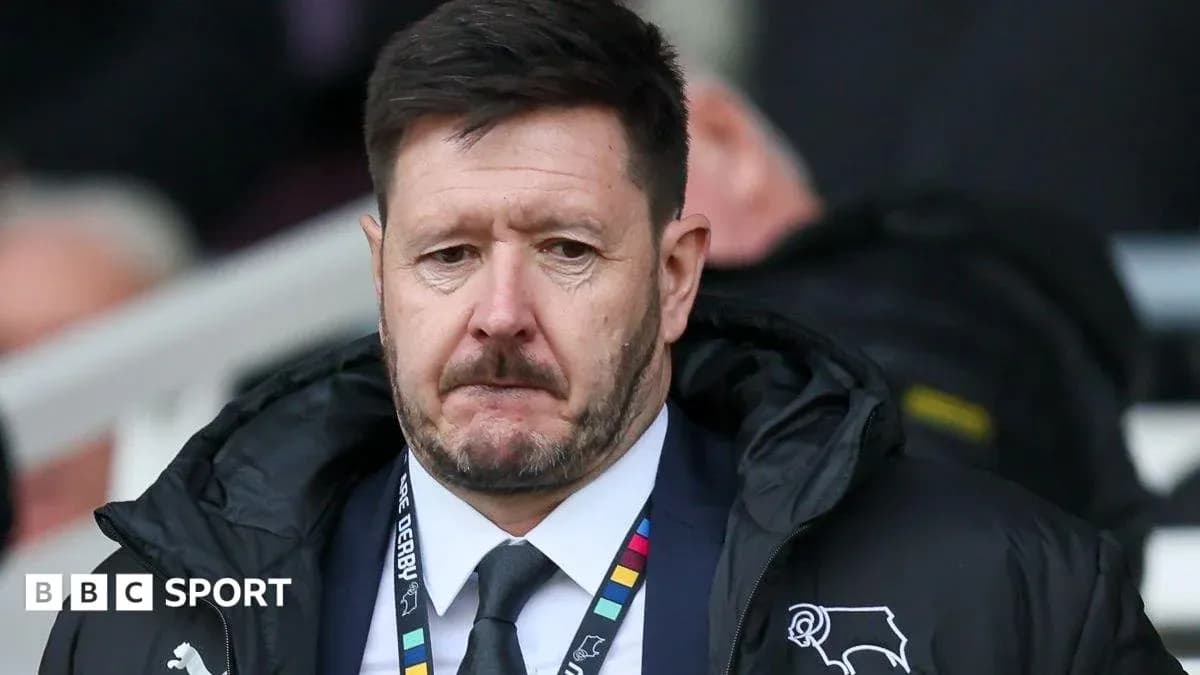
"The wind was taken out of our sails, totally," chief executive Stephen Pearce told BBC Radio Derby. "We weren't expecting it to fall down, effectively, an hour before we thought it was going to complete."
Derby had spent weeks in limbo while the deal was scrutinised, stuck in what Pearce called a "holding pattern" for a large chunk of the summer window. Plans were paused. Conversations were caveated. The club did not know who would actually own it by the time the season settled into rhythm.
Then came the collapse. And a choice.
"But we regrouped and everybody got back on the horse," Pearce said. "It was like, right how do we go again? And let's crack on with what we wanted to do."
Crucially, Clowes had never stopped acting like Derby’s long-term owner, even as he prepared to hand the club over. The transfer strategy for a promotion push had already been costed, signed off and set in motion. He pressed ahead while fully expecting not to see a penny back.
The numbers are stark.
- Around £6m to prise Bobby Clark from RB Salzburg on a permanent deal.
- A loan-to-buy move for Sam Szmodics from Ipswich, carrying a £2.7m commitment.
- Roughly £600,000 to bring in Alex Mowatt from West Bromwich Albion.
All funded by Clowes at a time when he believed his tenure was about to end.
"This is why he's such an incredible owner," Pearce said. "He thought the takeover was going to happen, he knew he was never going to get a penny back for all of that money he spent on those players and he still did it."
The alternative was obvious. He could have closed the tap.
"He could have quite easily, on 1 July, said to us and said to John [head coach John Eustace], 'look, I think this is going through, the signs are the club is going to be sold, you're just going to have to wait because every penny I put in into transfers now I'm not going to get back'.
"And he didn't. He backed it regardless and that's why we're [in] such a strong position."
Clowes has never hidden his wish to bring in fresh investment to fuel a return to the Premier League. Partnering with Al-Sheikh – a powerful figure in Saudi government circles and a major player in world boxing – looked like a dramatic step towards that goal for a club that missed the play-offs by a whisker last season.
Instead, when the deal disintegrated, he pulled Derby County off the market.
No more courting bidders. No more data rooms or due diligence. The energy went back into the squad.
The biggest statement after the aborted takeover came in the shape of David Ozoh, signed from Crystal Palace for around £4m. Around him, Derby stitched together a series of free transfers and loans, including a late-window reunion with Eiran Cashin on deadline day.
This was not the behaviour of a club licking its wounds. It was a club refusing to let a failed sale derail its climb.
Asked directly whether the disrupted summer had stalled Derby’s promotion drive, Pearce did not flinch.
"Not in the slightest, otherwise we wouldn't have spent all the money we've spent," he said. "We want to push on. We want progression this season."
The Premier League remains the target. The ownership saga, for now, is over. The man who almost walked away has paid again to stay in the fight.