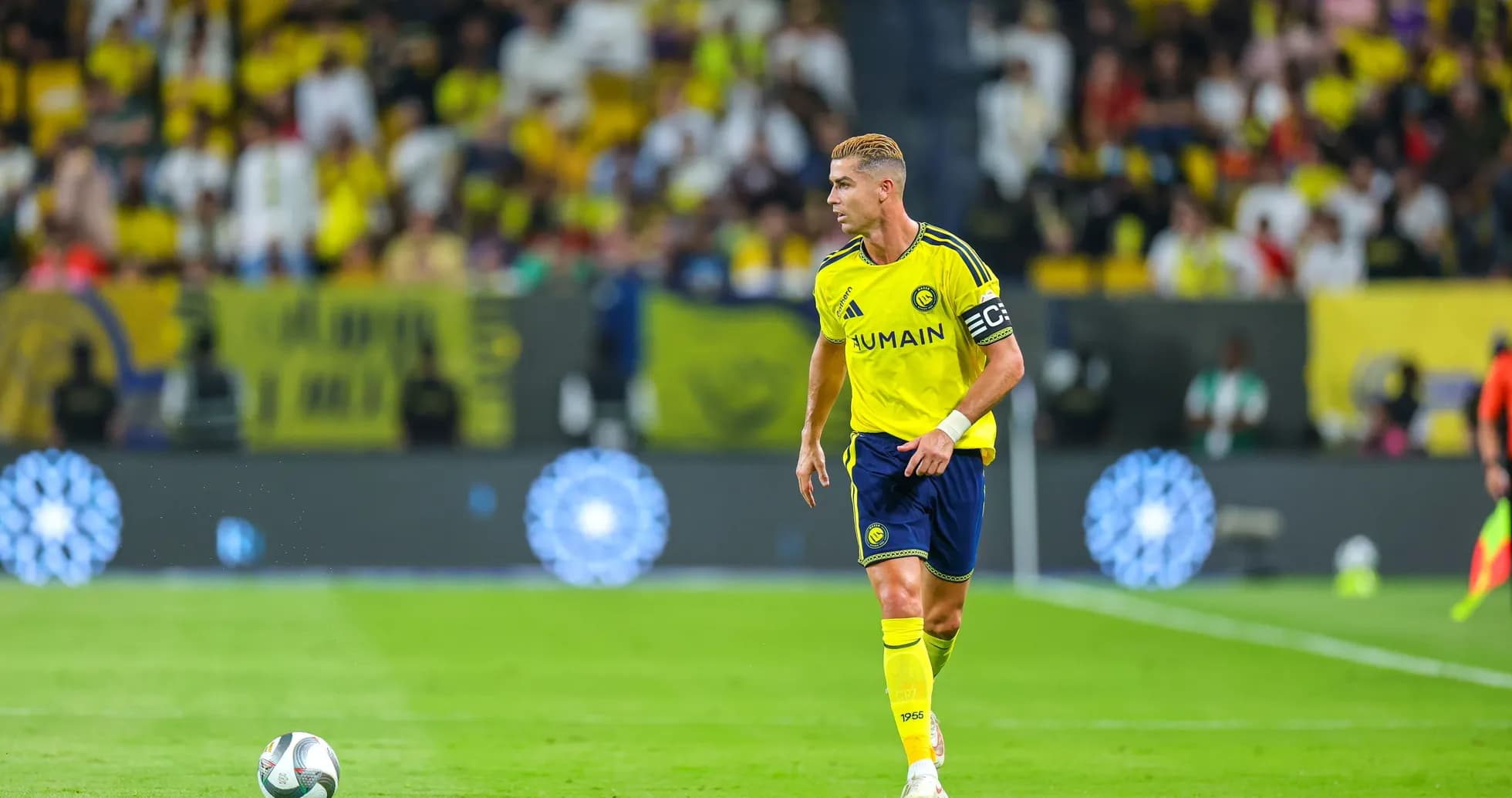
Cristiano Ronaldo Redefines Centre-Forward Play
Cristiano Ronaldo bent the idea of a centre-forward out of shape and rebuilt it on his own terms.
Against Abha, the Al-Nassr captain refused to stand still, refused to be a reference point. He roamed. He wandered into his own half, slid into midfield pockets, and stitched attacks together as if he were a playmaker, not the man usually waiting for the final pass.
Abha’s defenders never found him. They only ever found the space he had just vacated.
A Forward Who Refuses to Stay Still
Ronaldo read the game with the calm of a veteran and the hunger of a debutant. He dropped deep, sometimes all the way into the middle of Al-Nassr’s half, not to hide from the battle but to start it. Each retreat had a purpose: pull a defender out, tilt the back line, carve out an angle.
Then he went again.
Once the defensive block shifted, he surged forward into the gaps he had created. One moment he was almost level with his centre-backs, linking passes and turning play. Seconds later he was sprinting beyond Abha’s last man, attacking the space he’d just opened.
That constant movement shredded any sense of order in Abha’s marking. They never had a fixed point to track. Ronaldo appeared wide, then central, then suddenly inside the box. For a defence that wanted a stationary target, he was a moving riddle.
The key was that he didn’t settle for sideways drifting. His movement followed the rhythm of each attack. When Al-Nassr built patiently, he offered a passing option between the lines. When they accelerated, he became the runner in behind. Every shift gave a teammate an extra second, an extra yard, an extra passing lane.
Intelligence Over Explosiveness
At 42, the spectacle lies less in his sprint speed and more in his brain speed. This was a masterclass in reading spaces, in timing runs, in understanding when to appear and when to disappear.
When he dropped back, the intention was transparent but almost impossible to stop: drag a defender with him, tear a hole in the back line, then spin and attack that very hole. He helped build the move, then reappeared at its sharpest point.
His influence spread across the pitch. He was a connector in midfield, a decoy between the lines, and still the main threat inside the penalty area. It was a performance that stretched across multiple tactical roles without ever diluting his primary one.
Because he did not forget why he is on the pitch.
Still Ruthless Where It Matters
For all the clever movement, the match still needed a goal. Ronaldo delivered it with the kind of finish that has defined his career.
He rose to meet a cross and powered his header home, a reminder that age has not dulled his command of the air. The leap, the timing, the precision – the fundamentals remained intact. One moment he was part of the build-up; the next he was the man ending the move.
That goal perfectly captured his night. Not just a forward drifting away from danger zones to knit play together, but the player who arrived exactly when Al-Nassr needed someone to turn pressure into a lead.
The numbers underlined the eye test. Ronaldo earned an 8 out of 10 rating, unleashed 8 shots with 4 on target, created two key passes and completed a dribble. The man-of-the-match award felt less like a compliment and more like a formality.
One goal was enough to make the point. His value ran far beyond the scoreboard. His movement bent Abha’s defensive shape, his touches helped construct attacks, and then he finished one himself.
Doubts will keep circling about how long he can hold this level as the years stack up. Abha, though, saw a different version of that story: a Ronaldo who leans more on his mind than his muscles, who trades raw pace for pure understanding of space – and still finds a way to decide the game.