Champions League: Mbappé, Kane, and Emerging Stars Rewrite History
In a competition obsessed with its past, the UEFA Champions League is being rewritten in real time by a new wave of specialists, record‑hunters and serial match‑winners.
Mbappé joins the greats, Vinícius does the dirty work
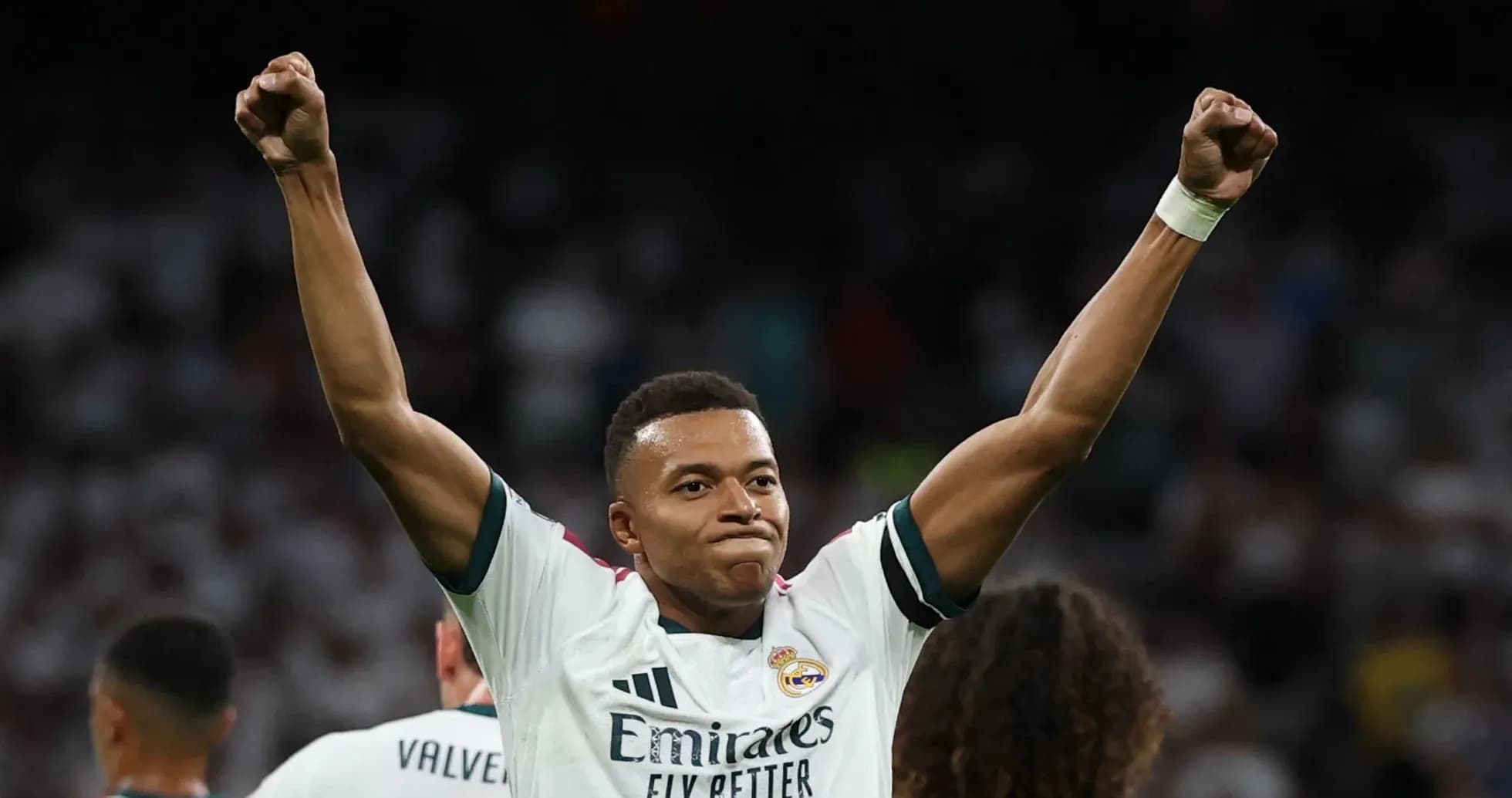
Kylian Mbappé now sits at the same table as Raúl. Seventy-one goals in the Champions League, fifth on the all‑time list, staring up only at Cristiano Ronaldo (140), Lionel Messi (129), Robert Lewandowski (109) and Karim Benzema (90). The names above him are carved into the tournament’s mythology. Mbappé is still adding chapters.
Behind him, Vinícius Júnior is proving that stardom at Real Madrid now demands sweat as much as sparkle. Against Inter Milan he recovered the ball nine times, his best return in a Champions League game. No Madrid forward had hit a higher number at home in the competition since Gonzalo Higuaín’s 12 against Juventus back in December 2008. The Brazilian winger, once seen purely as a dribbler and finisher, is now pressing like a midfielder.
At the other end of the pitch, Thibaut Courtois quietly crossed a milestone of his own, becoming the 56th player to reach 100 Champions League appearances. Goalkeepers rarely dominate the headlines in a competition defined by scorers, but Courtois’s longevity is starting to carry the weight of history.
Bayern’s goal machine and Kane’s ruthless streak
The numbers from Munich look almost industrial. Bayern have become only the second club to smash through the 900‑goal barrier in the Champions League, trailing only Real Madrid’s astonishing 1,139. Barcelona sit third on 767, Manchester United fourth on 549. Bayern’s identity in Europe is clear: relentless, mechanical, merciless.
At the heart of that now stands Harry Kane. The England captain has had a hand in 39 goals across all competitions in 2026, scoring 34 and assisting 5. Only his teammate Michael Olise can live with that output in Europe’s top five leagues, the Frenchman sitting on 34 contributions, split evenly between 17 goals and 17 assists.
Kane’s relationship with the Champions League is turning into an obsession. He has scored in eight consecutive matches in the competition, 10 goals in that run. One more game with his name on the scoresheet and he will match Robert Lewandowski’s Bayern record of nine straight scoring appearances, a mark the Pole achieved twice between 2019 and 2021. Cristiano Ronaldo still owns the all‑time streak with 11 consecutive scoring games from 2017 to 2018, the summit Kane is now stalking.
Over the last three seasons, nobody has touched him for direct goal involvement in the Champions League. Since 2024‑25, he has racked up 31 contributions – 26 goals and 5 assists – three more than his nearest challengers, Ousmane Dembélé and Raphinha, both on 28. The numbers say it plainly: this era of the competition belongs, in part, to Kane.
Olise, for his part, is no longer just a clever supporting act. Thirty‑four goal involvements in a calendar year is the return of a player stepping into genuine elite territory.
Barcelona’s new generation tears up the script
Barcelona’s start to the season feels like a throwback dressed in modern colours. Twenty‑two goals in their first five matches – the fourth‑best start in the club’s history, and their most prolific opening since 1950‑51. The shirts are the same. The football, at times, looks like a reimagined version of their old attacking swagger.
The face of it is Lamine Yamal. At 19 years and 58 days, he has already reached 100 goal contributions for the club, overtaking Lionel Messi as the youngest Barça player ever to hit that mark. Messi got there at 22. Yamal already sits on 101 contributions – 54 goals and 47 assists – numbers that would be impressive for a seasoned forward, never mind a teenager.
His Champions League figures underline the scale of his rise. Twelve goals in the competition leave him just one shy of Mbappé’s record of 13 as the highest‑scoring teenager in Champions League history. He has already passed the Frenchman for total contributions, 23 to Mbappé’s 20. The comparison no longer feels forced; it feels inevitable.
Raphinha is riding his own wave. He has become the first Barcelona player in the 21st century to score in each of the team’s first five matches of a single season, a streak that speaks to both form and authority in the final third.
The club’s Spanish contingent is making its mark across Europe too. Ferran Torres became the ninth Spaniard to score a Champions League hat‑trick and the first to hit three or more in a game for a non‑Spanish club since Lucas Pérez did it for Arsenal against Basel in December 2016. That treble pushed Torres to 21 Champions League goals, lifting him above Luis Enrique (19), Fernando Torres (20) and Cesc Fàbregas (20) into fifth on Spain’s all‑time scorers list in the European Cup and Champions League. Raúl, with his 71 goals, still towers at the top.
Dembélé climbs France’s ladder, PSG keep their run alive
Ousmane Dembélé’s numbers in Europe now carry real historical weight. He has reached 30 goals in the Champions League, overtaking David Trezeguet to become France’s fifth‑highest scorer in the competition. Only Karim Benzema (90), Kylian Mbappé (71), Thierry Henry (50) and Antoine Griezmann (44) stand ahead of him. For a player often discussed through the lens of injuries and inconsistency, the European record book tells a different story.
His club are building something steadier too. Paris Saint‑Germain have stretched their unbeaten run in the Champions League to 11 matches. Two more without defeat and they will match the best sequence in their history, set between October 2012 and November 2013. For a club desperate to turn domestic dominance into continental credibility, this kind of sustained run matters.
United’s European thread: Bruno, Cunha and a new generation
Manchester United’s relationship with Europe has been turbulent in recent years, but certain individuals are quietly assembling imposing records. Since his debut for the club in 2020, Bruno Fernandes has scored 23 goals and provided 21 assists in European competitions. No other midfielder can match that combined tally in the same period. He remains United’s metronome and their main creative risk‑taker when the anthem plays.
The Brazilian line at Old Trafford gained another entry as Matheus Cunha became the fourth Brazilian to score for United in the Champions League, after Anderson, Alex Telles and Casemiro. His goal was also the 241st scored by a different Brazilian player in the competition’s history, leaving Brazil just behind France, who have produced 242 distinct scorers. It is a statistic that underlines the depth of Brazilian influence on Europe’s elite stage.
Patrick Dorgu offered a glimpse of the future. The youngster became the youngest player to register an assist on his Champions League debut for United since Wayne Rooney did it at 18 in September 2004. Whenever a United teenager is mentioned in the same breath as Rooney, ears prick up.
Further south, another Argentine playmaker is carving out his own record. At 22 years and two days, Nico Paz became the youngest Argentine to provide two or more assists in a single Champions League match since Messi, who did it against Basel in October 2008 at 21 years and 120 days. The lineage is clear; the pressure will be too.
Arsenal’s evolving identity and Raya’s remarkable ratio
Arsenal’s numbers tell a story of tactical evolution. Ten goals in their first five matches of the season, none from set pieces. For a side that leaned heavily on dead‑ball routines last year, this is a sharp pivot back towards open‑play invention.
Their performance against Napoli underlined that shift. Arsenal unleashed 26 shots and posted an expected goals figure of 4.05, both their highest marks in a Champions League game since the 2010‑11 season. This is not just control; it is sustained, high‑volume threat.
At the back, David Raya is quietly putting together one of the most efficient goalkeeping records the competition has seen. He has kept clean sheets in 20 of his 37 Champions League starts – 54%. Among goalkeepers with at least 25 starts, no one can match that ratio. The numbers suggest a man who does not just participate in European nights, he closes them down.
Martin Ødegaard has stepped into the season with a sharper edge as well. The Norwegian has scored in four of his five games across all competitions so far, a staggering uptick from last term, when he managed just one goal in 36 appearances. The armband sits heavier when the goals start to come from midfield.
Como’s statement, Sabah’s curiosity
Italy continues to feed fresh stories into the Champions League. Como, on their debut in the European Cup/Champions League, became only the second Serie A side to score four or more goals in their first game, after Sampdoria’s 5‑0 demolition of Rosenborg in September 1991. They are also the 12th of 16 Italian clubs to have found the net in the competition. When Italian sides arrive, they tend not to tiptoe in.
Sabah, meanwhile, wrote a different kind of history. On their very first appearance in the Champions League, they became the first team ever to start a match with 11 players from 11 different nationalities. In a tournament built on global talent, this was diversity taken to its logical extreme.
The race against history
Across the continent, the Champions League is again doing what it does best: turning current form into permanent ink.
Mbappé has Raúl in his rear‑view mirror. Kane is hunting Lewandowski’s records and, beyond that, Ronaldo’s. Yamal is chasing down Mbappé’s teenage marks while rewriting Messi’s timelines at Barcelona. Dembélé is climbing France’s scoring ladder, Bruno Fernandes is outpacing every other midfielder in Europe, and Raya is redefining what elite goalkeeping efficiency looks like on Tuesday and Wednesday nights.
The numbers will keep changing. The names at the top of the lists may not.