Carrick's Dilemma: Bruno Fernandes and Martínez's Future
Old Trafford has seen storms before. Few have rolled in as quickly as this one.
By the time Bournemouth walk out for Sunday’s 2pm kick-off, the story may not be about the visitors at all. It may be about whether Michael Carrick has just torn up the old order.
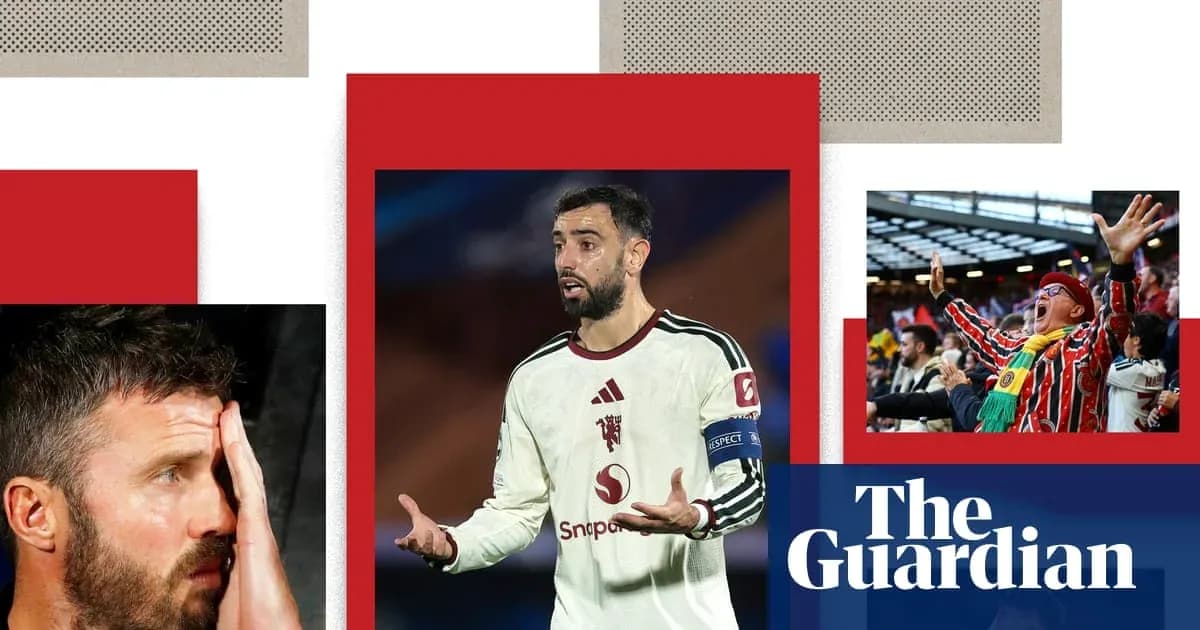
The new head coach refused on Friday to rule out stripping Bruno Fernandes of the captaincy or even dropping him. That alone tells you where the power struggle now sits. Fernandes, United’s five-time player of the year and emotional barometer for so long, has walked right up to the line of insubordination and stared his manager in the eye.
His comments after Wednesday’s 4-1 collapse at Como still hang in the air. “It’s a decision from the staff to not press man-to-man and sometimes leave space behind and try to get the ball, wait for them, but sometimes when you give space to these teams they get confidence,” he said, dissecting the tactical plan in public. That is not a throwaway remark. That is a direct challenge.
Lisandro Martínez, another senior figure and another of the so‑called mutineers, sits in the same bracket. Both are out of contract in the summer, with the club holding an extra year’s option in each case. All recent signals point one way: they intend to go.
Which drags United into a harsh, business-first conversation. Do they cling to two unhappy pillars of the dressing room or cash in now and start again? A combined £65m or so in January – roughly £40m for Fernandes, £25m for Martínez – would offer Carrick, or whoever follows him, real ammunition for a rebuild that feels overdue.
If Carrick swings the axe now, he sends a message that the manager, not the dressing room, runs Manchester United. If he ducks it, the sense of a lame-duck regime only grows. Even if he does not survive the season, the next man would inherit a cleaner, clearer landscape.
A Fractured Bond With the Travelling Faithful
Seven hundred United supporters trudged through the Lombardy rain to watch their side disintegrate at Como. They stayed, they sang, they suffered.
They will be there again on Sunday, filling Old Trafford with that stubborn hope only football fans understand. Carrick speaks often about the supporters as the club’s lifeblood. The question is whether all of his players believe it – or play like they do.
Nights like Como are not just bad results; they are breaches of trust. The minimum United fans demand is effort and connection. A manager can set pressing triggers and passing patterns, but he can also set non-negotiables: work, respect, responsibility to the shirt.
If Carrick wants to stop the rot, he has to hard-wire that creed into the squad. Performances like Wednesday’s do not happen in teams that truly feel accountable to their own away end.
Lost Joy, Lost Identity
Once, you could recognise Manchester United with your eyes half closed.
Sir Alex Ferguson’s flying wingers. Sir Matt Busby’s holy trinity of Best, Law, Charlton. The “attack, attack, attack” roar that used to feel like a command, not a nostalgic chant. Carrick admitted on Friday that much of that has been “lost”. You can see it every week.
You did not see it, though, on 17 January 2026. On that night, in the first game of his second spell, Carrick sent out a side that tore into Manchester City from the first whistle. United suffocated Pep Guardiola’s team, denied them air, and ran out 2-0 winners. Old Trafford bounced. The old place felt alive again.
That was the template for last season: a front-foot, energetic side that finished third and played with a spring in its step. This campaign has been the mirror image. The smile has gone. A heavy, fatalistic mood has crept back in – the same gloom Carrick had swept away at the end of Ruben Amorim’s tenure.
Carrick has tried to shift United towards a more possession-heavy style. On paper, it makes sense. On grass, the pieces have not fitted. Youri Tielemans, signed to help run the midfield, has lacked the legs to patrol the centre and has been pushed into the No 10 role. Kobbie Mainoo, the one young midfielder who can genuinely command an engine room, is injured. Fernandes, meanwhile, continues to roam, chasing the game, leaving holes where a calm passing option should be.
The result is a team caught between ideals. Neither the ruthless counter-attacking beast of old nor a controlled, modern possession side. Just a muddle.
Time for Youth to Jolt the Hierarchy
There is a core of senior players who have seen too many cycles and survived too many clear-outs. Fernandes, Luke Shaw, Harry Maguire, Diogo Dalot, Marcus Rashford, Amad Diallo, Martínez – all have banked years of service. Right now, too many of them are miles off their best.
When a group goes stale, sometimes the only shock therapy is youth.
United have a cluster of teenagers who have already dipped a toe into senior football and are ready for more. Shea Lacey, a sharp, direct wide player. Harry Amass, a left-back with promise. Jack and Tyler Fletcher, the twins: Jack an intelligent No 10, Tyler a defensive midfielder with bite. Between them, they have just 22 appearances.
None of them are guaranteed solutions. But can they really offer less than the senior names sleepwalking through games? Young players run. They chase lost causes. They play with a freedom that can cut through the thickest fog. In a dressing room that feels weighed down, that energy is priceless.
Carrick does not need a revolution overnight. He just needs to show that places are earned, not inherited.
An Attack That Has Forgotten How to Hurt Teams
The numbers are damning.
In seven of their 11 matches this season, United have scored once or not at all. Ten goals in seven league fixtures. Five in three Champions League outings, four of those against minnows Sabah. For a club built on attacking swagger, that is a crisis of identity as much as output.
At Como, the same pattern repeated: no clear structure, no sustained control, barely any chances. Just a team passing time until the next mistake. That is how you slide towards a relegation scrap, not a European push.
Carrick has forwards who thrive in chaos, not choreographed sterility. Matheus Cunha wants space to drive into, to improvise. Bryan Mbeumo lives off quick transitions and sharp, early balls. Others in the squad are cut from the same cloth. A looser, more instinctive attacking style – without abandoning basic organisation – would suit them far better than the laboured, risk-averse build-up currently on display.
United showed last season that they can bloody the noses of the elite. They beat City, Arsenal, Chelsea and Liverpool by playing with courage and speed. Those nights were not flukes. They were the product of a mentality that has somehow drained away.
Now comes the crossroads. Does Carrick cling to big names, a cautious game plan and a brittle hierarchy? Or does he rip up the script – confront his captain, trust his kids, and unleash an attack that scares people again?
The answers will not just shape Sunday against Bournemouth. They will decide what kind of club Manchester United want to be in the years to come.