Brighton & Hove Albion: From Survival to European Contenders
There was a time when Brighton & Hove Albion were fighting not for promotion, not for Europe, but for oxygen.
Around the turn of the century, the club were clinging to life, stripped of the Goldstone Ground and shunted from one borrowed home to another. Gillingham first. Then the makeshift surrounds of the Withdean Stadium, a running track dressed up as a football ground, where ambition often felt as temporary as the scaffolding.
From that backdrop of uncertainty, the story that now frames Brighton’s 125-year history feels almost surreal.
From marches on the seafront to a seat at Europe’s table
Mark McGhee remembers the struggle vividly. The Scot, back in the city to see the new “Brighton & Hove Albion: Stand or Fall” gallery open as part of the club’s anniversary celebrations, was there when the fight for a future stadium became a weekly crusade.
“We got the permission,” he told GOAL, recalling the long campaign led by then-chairman Dick Knight, the marches up and down the seafront, the lectures, the pleas. The planning green light eventually came. The money did not.
Brighton had a dream on paper and no clear way to pay for it.
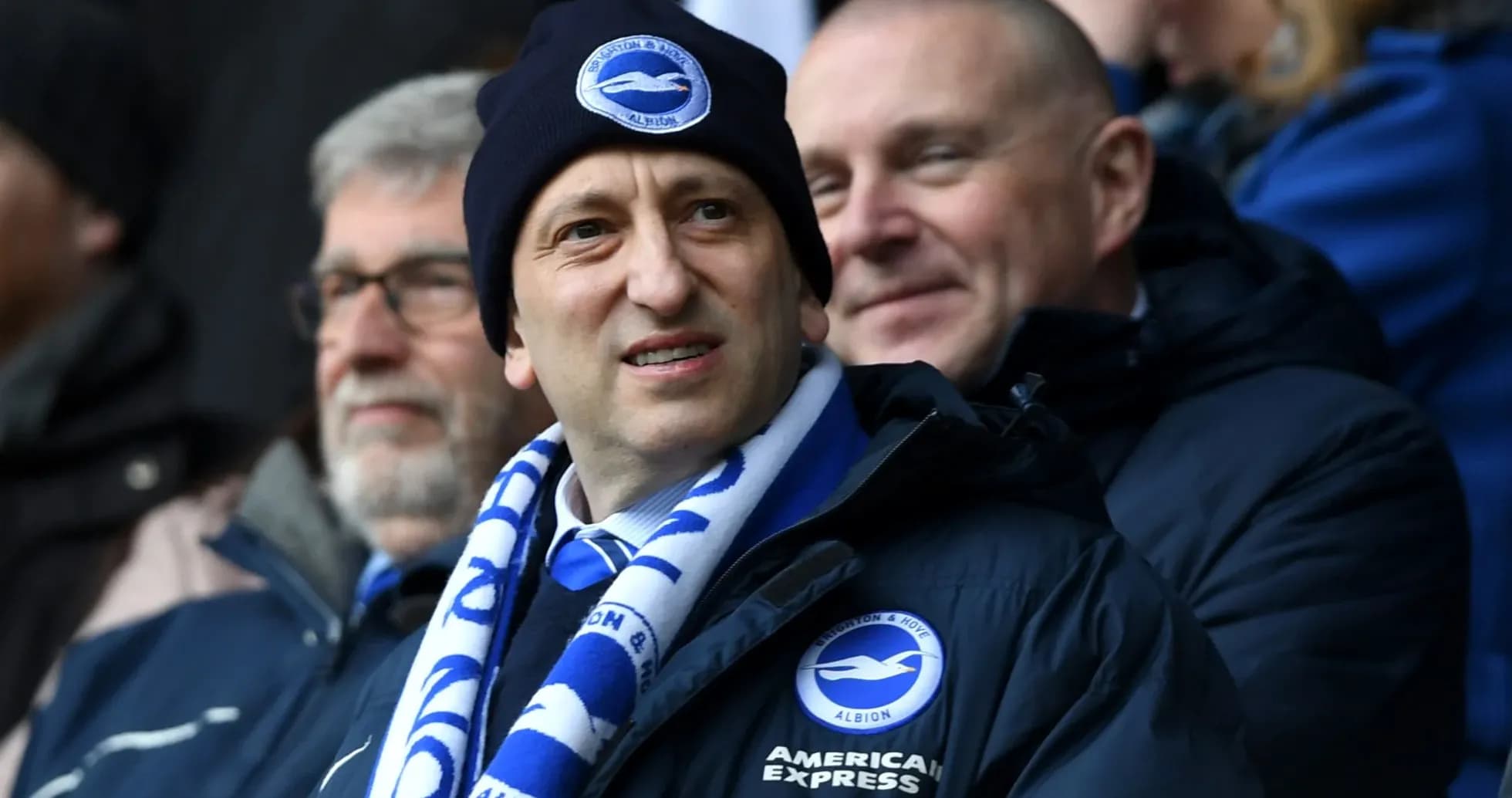
Then Tony Bloom arrived.
A lifelong supporter, Bloom stepped in around 2009 and changed the scale of the conversation. At first, many assumed he would “only pay for the building of a stadium,” as McGhee puts it. That alone would have been transformative for a club drifting between grounds. People did not yet grasp what else was coming with him.
They soon learned.
Bloom’s vision stretched far beyond bricks and seats. The Amex Stadium rose, a statement of permanence and intent. A state-of-the-art training ground followed. Infrastructure, analytics, a coherent footballing philosophy – the foundations of a modern, ambitious club began to settle under the Sussex coast.
Seven seasons after Bloom’s arrival, Brighton had climbed from League One to the Premier League. They have now spent nine straight years in the top flight. The nomads found a home, then turned it into a launchpad.
The Bloom family’s long shadow
Bloom’s story at Brighton is not a billionaire parachuting into a random project. It is a family thread woven through the club’s history.
McGhee talks about Ray Bloom, Tony’s uncle, who served as a director during his time as manager. Friday lunches with Ray and Dick Knight at Topolino’s in Brighton were a regular ritual. Over plates and plans, Ray would talk about a “genius young nephew” – a mathematical prodigy with a sharp mind for numbers and risk.
“So I'd heard of Tony as a kid, long before I realised what he'd become,” McGhee recalls. The Bloom name runs deep at Albion. The Harry Bloom lounge at the Amex, where McGhee watched the recent game against Aston Villa, underlines that lineage.
“So, he's as much, I'm sure, done this for his family as he has for the Brighton public,” McGhee says. It feels less like ownership and more like stewardship.
From survival to silverware
Brighton’s honours list is modest but meaningful: titles in the third and fourth tiers, a Community Shield, runners-up in the 1983 FA Cup final. For decades, that was the ceiling.
Now the conversation has shifted. The Seagulls are back in Europe, this time in the Conference League, a competition that has already delivered glory to English clubs like West Ham and revived European nights for Chelsea and Crystal Palace.
This is no sightseeing tour for Bloom.
“I think that Tony's not in this to be a generous benefactor,” McGhee says. “I think he wants to win stuff, and he's putting things in place to create a team that can.”
The targets are clear. Domestic cups. European runs. Real shots at silverware.
“They have a chance this year in Europe, they have a chance every year now in one of the domestic trophies,” McGhee insists. He is realistic about the Premier League title – “I don't think they have a chance of winning the Premier League” – but sees no reason Brighton cannot push deep into the FA Cup or League Cup.
“With a fair wind and a good draw,” he adds, a final in one of those competitions feels like “the inevitable progression.”
That word – inevitable – would have sounded absurd when the club were begging for planning permission and scratching around for transfer funds. Now it feels like a logical next step.
A club in a gallery, a club in motion
The new permanent gallery at Brighton Museum & Art Gallery, opened on August 15, captures that journey in physical form. “Stand or Fall” is more than a slogan; it is a timeline of crisis and resilience.
Iconic objects, treasured memorabilia, archive footage, personal stories – the exhibition traces the club’s path from the Goldstone to Gillingham, from Withdean to the Amex, from near-extinction to European qualification. It places Brighton not just in English football’s tapestry, but at the heart of its own city.
Visitors walk through the setbacks and the triumphs. They see how close Albion came to losing everything. They see how stubbornly they refused.
And while the history sits in glass cases, the next chapter is already being written on the pitch.
Manchester United await in the Carabao Cup third round, a sharp early test of Brighton’s cup credentials. The Conference League draw has paired them with the likes of Panathinaikos and Getafe, the sort of names that once belonged only on television screens for Albion fans.
From marches on the seafront to European nights under the lights, Brighton have already travelled a long way.
The question now is not whether they belong at this level. It is when that “inevitable” piece of major silverware finally finds its way into Bloom’s stadium, and into that gallery of a club that refused to fall.