Blackburn Rovers' Chaotic Summer Transfer Window
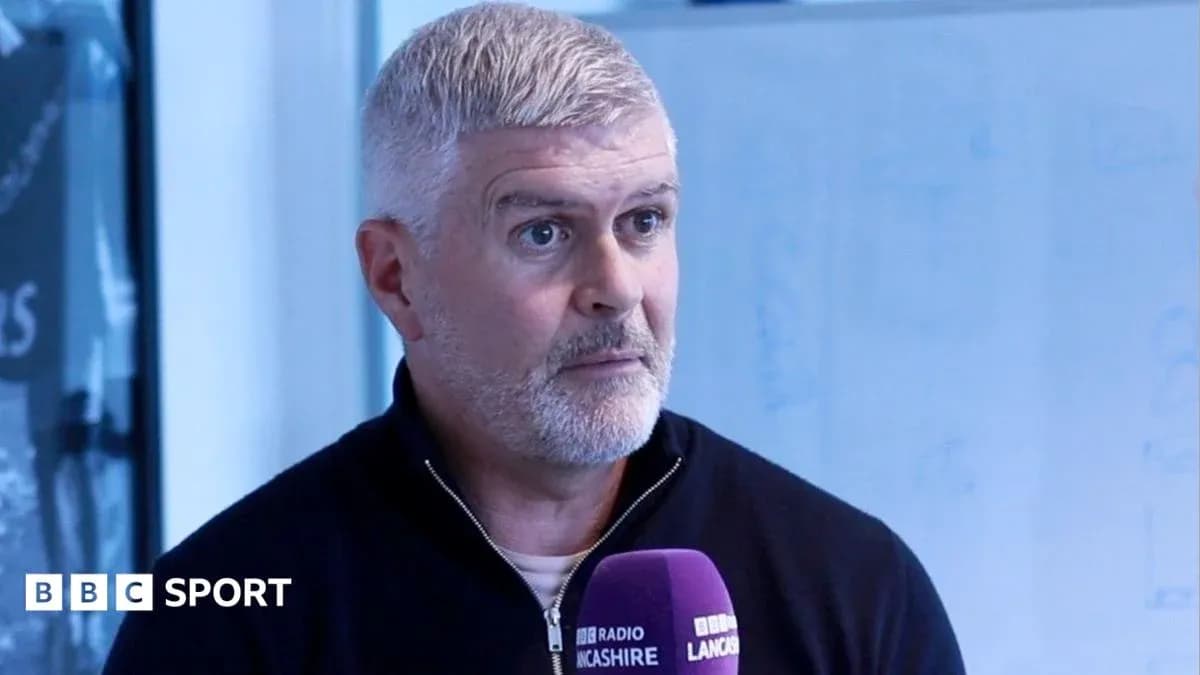
Steve Curwood walked into Blackburn Rovers in the middle of a storm. Two months on, with the transfer window shut and tempers running high, the new chief executive is standing his ground.
“Everyone is frustrated,” he admitted, and he knows exactly why.
Four signings in. Seven players out. Three deadline-day deals collapsed. A fanbase already on edge now convinced the club has stumbled through a pivotal summer in the Championship. The numbers alone tell a story of a squad thinned, not strengthened.
Curwood insists that’s not through a lack of ambition or investment.
“The investment has been there,” he told BBC Radio Lancashire. “There hasn’t been a reluctance from the board. There has been collaboration throughout the process. I think at the final hurdle we haven’t been able to get them over the line.”
The final hurdle proved brutal.
Deals were agreed, he says, with both players and clubs. Then came the late twists that define modern transfer windows. “We were gazumped at the last minute on a couple of deals,” Curwood revealed. One overseas move dragged on longer than expected and never landed. BBC Radio Lancashire understands two of the failed moves involved Reo Hatate, who joined Burnley, and Brian De Keersmaecker, who signed for Bristol City.
For supporters, those names only sharpen the sense of what might have been.
Mowbray’s late arrival and a chaotic window
The word Curwood uses for the summer is “chaotic”. He doesn’t shy away from it. He links that chaos to one key decision: the timing of Tony Mowbray’s return.
Blackburn ended last season under Michael O’Neill, who balanced the job with his duties as Northern Ireland boss and kept the club in the Championship. When O’Neill turned down the permanent role in mid-May, Rovers turned back to a familiar face. Mowbray was reappointed on 5 June.
By then, the clock was already ticking.
“Ideally your manager will be in by the start of May to work out where are we going for next year,” Curwood said. “So that timeline has been constrained somewhat, and then conflated by injuries.”
The late appointment shaped everything. Do you move early in the market and risk missing your top targets? Or wait for the manager’s preferred names and accept the danger that someone else will swoop in?
“If you want to do your deals early, maybe you can’t go after the best players sometimes,” Curwood explained. “You’ve got to either wait and go for target number one with this risk, or cement one in the building because we know we can get him, like Jayden Fevrier for example.”
Rovers chose to chase specifics. Mowbray wanted players who were not just available, but committed to his way of playing.
“We might highlight three or four targets, but Tony wants to make sure the people here want to be here and play for him,” Curwood said. “Was it the wrong thing to do to push for the specific players Tony wanted? These things happen when you try to be specific, but none of us want to just bring in players to add bodies in the building.”
It is a purist’s stance, and one that sounds admirable in theory. On deadline night, with deals collapsing and options narrowing, it sounded a lot more painful.
Outgoings, missed incomings and a thin squad
Seven players left in the summer. The exits were part of a deliberate reshaping, Curwood insists, not a miscalculation that backfired when targets slipped away.
“You’ve got to allow the manager to make certain decisions,” he said. “The squad list was top-heavy. Certain players needed game-time, like George Pratt going to Bradford.”
At the same time, Rovers resisted interest in some of their key assets. BBC Radio Lancashire understands they turned down offers for Ryoya Morishita, Sean McLoughlin, Balasz Toth, Yuki Ohashi and Ryan Alebiosu. Keeping that core was a statement in itself, but it does not mask the sense that the squad is light in key areas.
Curwood’s defence leans heavily on context. He has walked into a club mid-process, with staff turnover off the pitch as well as on it. “It’s been a whirlwind since I arrived,” the 54-year-old said, pointing to a transfer window, an administrator leaving for another club, and a senior physiotherapist departing in quick succession.
The result has been a club scrambling to adjust at every level while trying to operate in one of the most unforgiving markets in football. “We can talk about morals in football,” Curwood said pointedly. “Maybe there aren’t too many now and that’s what’s happened.”
In other words: Blackburn thought they had their men. Rival clubs and the realities of the market thought otherwise.
“Give us time”
Curwood is not asking supporters to be happy. He knows that is impossible after a window that left Mowbray without the “extra little bit of something” he wanted.
“Yes – it’s frustrating, we’re frustrated,” Curwood admitted. “Tony wanted that extra little bit of something which we haven’t managed to do.”
What he is asking for is time.
“The first 90 days will give me time to reflect and bring some of the processes this club need to improve where we are,” he said. He talks about structure, about learning from a chaotic summer, about making sure Blackburn are not again left watching deals slip away in the final hours.
“We’ll be in a very different position moving into the next window, and beyond that.”
The window has closed. The arguments will not. Now Mowbray must work with what he has, Curwood must prove his words carry weight, and Blackburn Rovers must show that a bruising summer was a painful lesson rather than the start of a deeper slide.