Ballon d’Or 2023: Shortlist of Coaches Revealed
The Ballon d’Or gala will land in London in two months’ time, and for once it won’t just be about the players. The coach’s award, often treated like a side dish to the main event, has a shortlist that says a lot about where power and ideas in football currently live.
Ten names. One trophy. And a striking pattern.
Men’s shortlist: a Spanish school, with one Belgian disruptor
The men’s nominees:
- Mikel Arteta (Arsenal)
- Luis de la Fuente (Spain national team)
- Unai Emery (Aston Villa)
- Vincent Kompany (Bayern Munich)
- Luis Enrique (Paris Saint-Germain)
Four Spaniards and one Belgian. That’s not a quirk of the voting. It’s a map of where the game’s tactical edge is being drawn.
Spain is everywhere. On the touchline, just as much as on the pitch.
Arteta finally dragged Arsenal over the line in the Premier League and took them all the way to a Champions League final. That alone would usually plant a coach at the front of this race. His Arsenal side played with control and ferocity, the culmination of a project that once looked fragile but now feels heavyweight.
Luis Enrique, never shy of big stages, did what almost no one does: he repeated as Champions League winner with Paris Saint-Germain. In a club defined by star power and short-term thinking, he imposed structure, identity, and a ruthless edge in Europe. Back‑to‑back continental titles are the kind of achievement voters remember.
Emery, the Europa League specialist, lived up to his reputation again. This time with Aston Villa. A club that, not long ago, was fighting to stabilize in the Premier League, now has a European trophy in its cabinet thanks to his relentless obsession with detail and knockout football. He doesn’t just win in Europe; he bends the competition to his will.
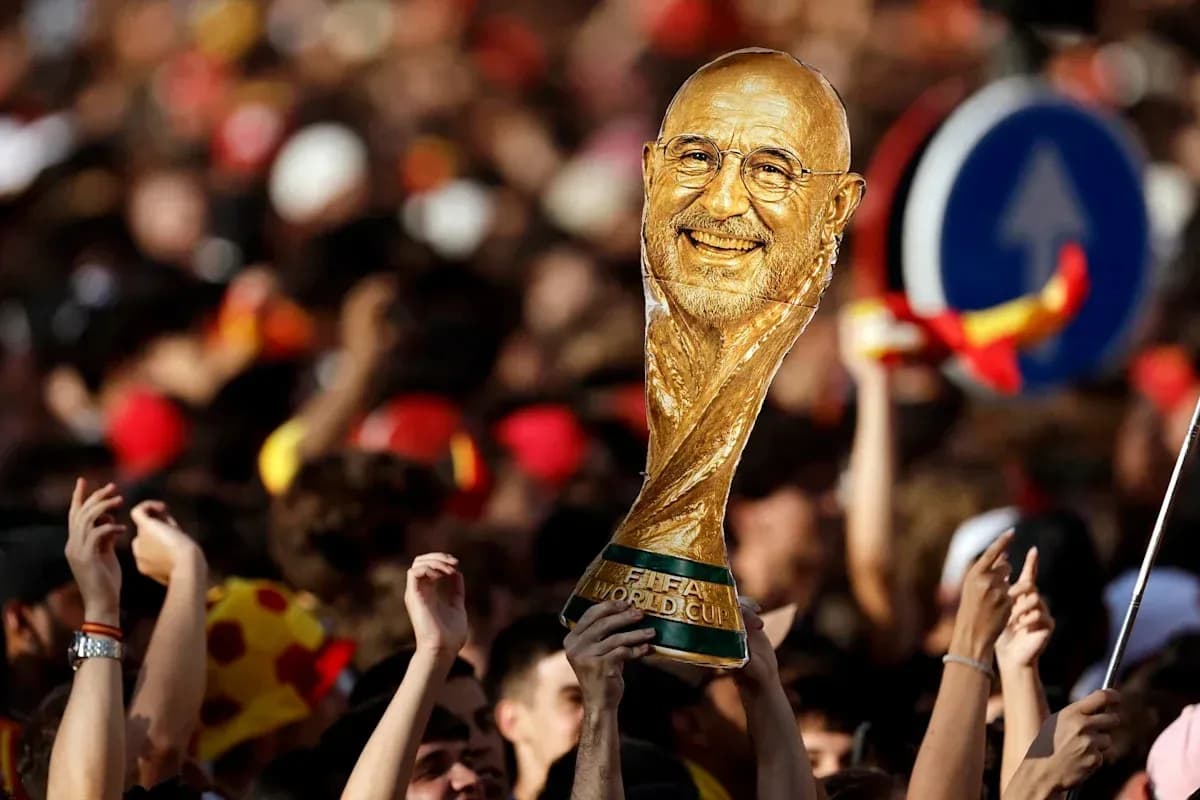
Then there is Luis de la Fuente. The international coach who towers over the rest in one simple regard: he won the biggest prize on offer. While club managers grind through 50‑plus games a season, the national team boss lives and dies on a handful of nights. De la Fuente got those nights right. That alone will make him a powerful favourite when ballots are marked.
Amid this Spanish wave stands Vincent Kompany, the lone Belgian and the clearest stylistic outlier on the list. His Bayern Munich side didn’t just win; they dominated. Bundesliga and DFB Pokal secured, and they did it with the kind of expansive, brave football that has become his hallmark. Yet even here, the Spanish thread runs through the story. Kompany is a disciple of Pep Guardiola, his ideas shaped in Manchester and refined in Munich.
So the question hangs over the rest of the world: how did Spain get here? How did one country come to define so much of what top-level coaching looks like?
Women’s shortlist: a new name guaranteed on the trophy
On the women’s side, the field is wide open in a different way. None of the nominees has ever lifted this award. Whoever wins will carve a new name into Ballon d’Or history.
The nominees:
- Jonatan Giráldez Costas (OL Lyonnes)
- Andrée Jeglertz (Manchester City)
- Nils Nielsen (Japanese national team)
- Pere Romeu (FC Barcelona)
- Elena Sadiku (BK Häcken)
Every single coach arrives armed with silverware.
Giráldez turned OL Lyonnes into a domestic wrecking ball, sweeping the French Championship, the French Cup, and the French League Cup. Three trophies, one season, one clear message: Lyon’s aura in the women’s game remains very real.
Jeglertz answered from England. Under his watch, Manchester City took the WSL and the FA Cup, asserting themselves in the most competitive league in women’s club football. Titles in England aren’t handed out; they’re prised away from rivals. City did exactly that.
Nielsen’s case is different. He’s currently unattached at club level, yet his work with Japan delivered the Asian Cup. International tournaments are unforgiving; one bad half can undo years of planning. Japan didn’t blink, and Nielsen walks into this vote with a continental crown on his CV.
Sadiku’s season with BK Häcken brought a Europa Cup triumph, a landmark achievement for a club still shaping its European identity. It takes nerve to guide a side through unfamiliar territory and come out the other end with a trophy.
And then there is Pere Romeu at FC Barcelona, steering what feels less like a team and more like a machine. Barcelona hoovered up the UEFA Women’s Champions League, the Spanish Cup, La Liga, and the Spanish Super Cup. Four trophies. Four different fronts. One relentless standard. If the Ballon d’Or for coaches ever leaned purely on volume of titles, Romeu would be hard to look past.
The men’s list underlines a Spanish era. The women’s list guarantees a fresh chapter. In London, one night in two months’ time, ten seasons of work will be boiled down to two names.
The only real mystery left is simple: which philosophy, which project, which trophy haul will define 2026?