Ancelotti vs. Thiago Silva: A Clash of Visions for Brazil's Future
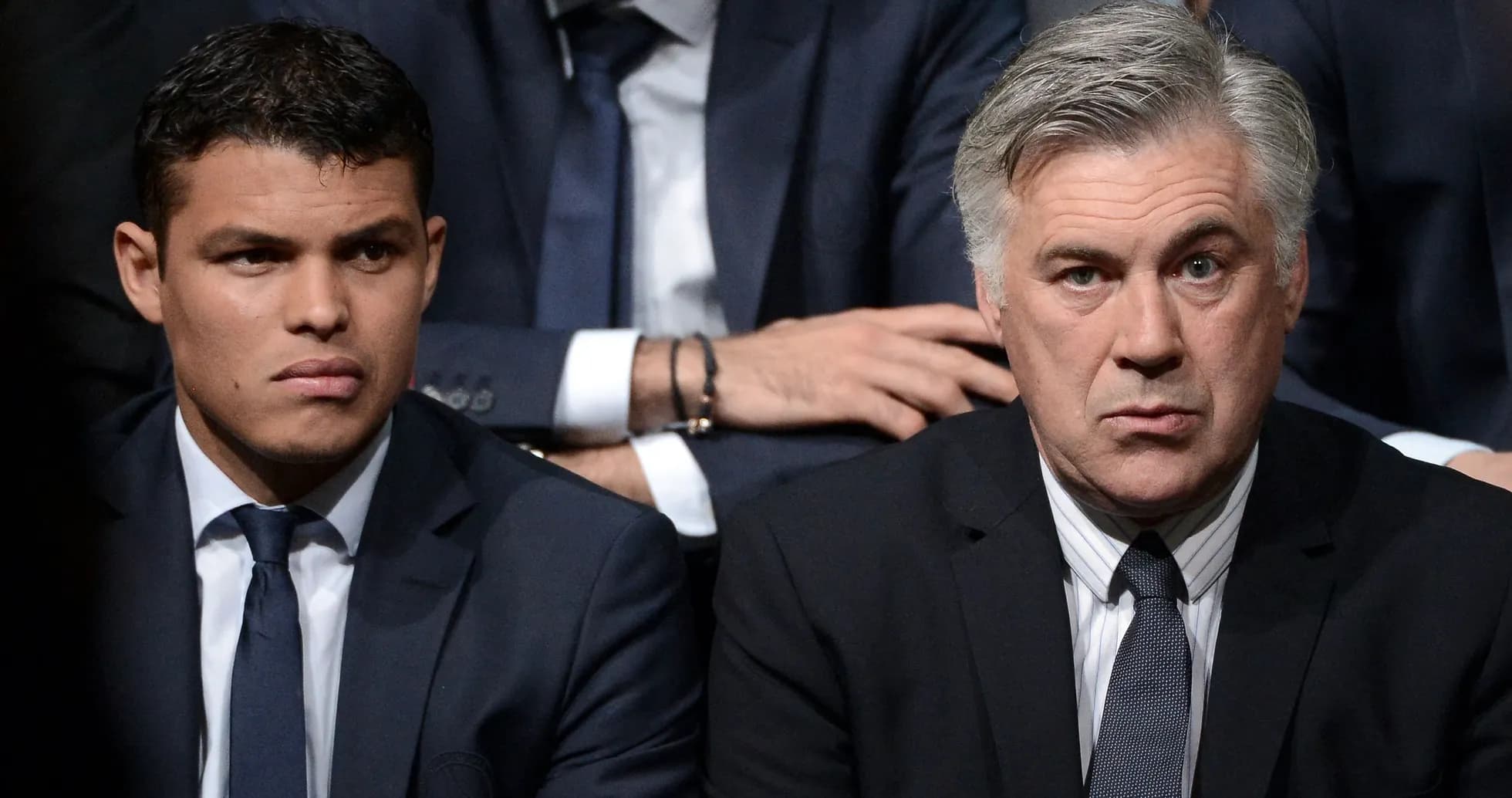
Carlo Ancelotti and Thiago Silva were once perfectly aligned. In Paris, they built a title-winning defence and a bond strong enough for Ancelotti to call the Brazilian “the best defender in the world.”
Now, they stand on opposite sides of Brazil’s future.
From Paris allies to Seleção fault line
The flashpoint came as Ancelotti unveiled a 26-man squad for Brazil’s friendlies against Australia and India, a list that signalled a clear break with the old guard. Ten domestic-based players. Ten uncapped names. A squad that screams reset.
For Thiago Silva, that reset looks more like a purge.
Fresh from Fluminense’s Copa Libertadores win over Platense, the 113-cap defender used a Radio Tupi interview to launch a pointed critique of his former coach’s approach to renewal at international level.
“Do you want me to lie or tell the truth? You can't rule out players who are 31, 32 or 33,” he said, cutting straight to the heart of the matter. “In the Brazilian national team, things have to be done step by step. You can't just get rid of everyone and bring in new players.”
Silva, left out of the recent World Cup squad despite an impressive loan spell at FC Porto, framed the debate as one of context and culture. Ancelotti, he argued, is trying to apply a European model of squad turnover to a national team that needs a slower, more careful evolution.
“He comes from European football, where it's easier to make changes,” Silva added. “It doesn't work like that here. I don't agree with it, but he's the one in charge.”
Respect for the coach. Total disagreement with the method.
Ancelotti fires back — quietly, but clearly
The response came in Rio, at CBF headquarters, with the cameras rolling. Ancelotti did not go searching for confrontation, but he did not sidestep it either.
Asked directly about Silva’s criticism, the Italian shrugged: “I don't look.”
Short, dismissive, and then straight into his vision.
“For the objectives we have in these friendlies, it's a balanced list,” he said, outlining a strategy that leans heavily toward the future without closing the door on the past. “I don't generally look at players' age. Right now, the priority is young players. But if a 34 or 35-year-old is prepared to play in an important competition, he will be in the national team.”
The message was blunt. These games are for testing. The veterans will be judged not by their birth certificates, but by whether they can still carry Brazil in major tournaments. The present window belongs to the next generation.
A new wave, under scrutiny
Ancelotti’s squad backs up every word. Ten players, all under 30, have been handed a first senior call-up.
In goal, Hugo Souza, Pedro Morisco and Otavio headline the new intake, a trio tasked with pushing their way into a position Brazil have traditionally guarded with extreme caution.
At the back, the turnover is even more striking. Arthur Dias, Jair, Mauro Junior, Matheuzinho and Manchester City’s Vitor Reis step into a defensive pool that, not long ago, was defined by Thiago Silva’s authority and experience. Now, the line is being redrawn.
Midfield brings more fresh faces. Breno Bidon and Gabriel Bontempo have earned their first invitations, dropping into a dressing room that still has star power in attack: Vinicius Junior, Endrick, Estevao and Raphinha are there to carry the creative and goalscoring burden.
This is not a gentle tweak. It is a deliberate injection of youth, staged in a low-risk environment: friendlies against Australia on September 25 and 29, then India in Kolkata on October 3. Ancelotti wants answers before the stakes rise again.
Two visions for Brazil’s future
Strip away the soundbites and the disagreement between Ancelotti and Thiago Silva is about timing and trust.
Silva believes the national team must treat experience as a non-negotiable asset, especially in a country where pressure on the Seleção never dips. To him, discarding players in their early 30s wastes invaluable know-how and destabilises a dressing room that should evolve, not be overturned.
Ancelotti sees the same pressure and chooses to confront it with renewal. He is willing to risk short-term friction to accelerate the development of a new core. Friendlies are for experimentation; tournaments are for those who prove they can handle them, whatever their age.
Both men have lived the sharp end of elite football. Both have lifted trophies and carried expectations. Now they disagree, loudly and publicly, on how Brazil should rise from another World Cup disappointment.
The next few weeks will not settle that argument. But as this young squad takes its first steps against Australia and then in Kolkata, every performance will feed into it.
If the kids deliver, Ancelotti’s gamble gathers strength. If they stumble, the calls for experience — and for voices like Thiago Silva’s — will only grow louder.