Ancelotti Stands Firm on Raphinha's Call-Up for Brazil
Carlo Ancelotti has never been one to flinch under pressure. Not in Champions League finals, not in dressing rooms full of egos, and certainly not in front of an angry club president on the other side of the Atlantic.
So when Barcelona chief Joan Laporta bristled at Brazil’s decision to call up Raphinha for a pair of friendlies in Asia, Ancelotti’s response was simple: the Selecao come first.
Ancelotti stands his ground
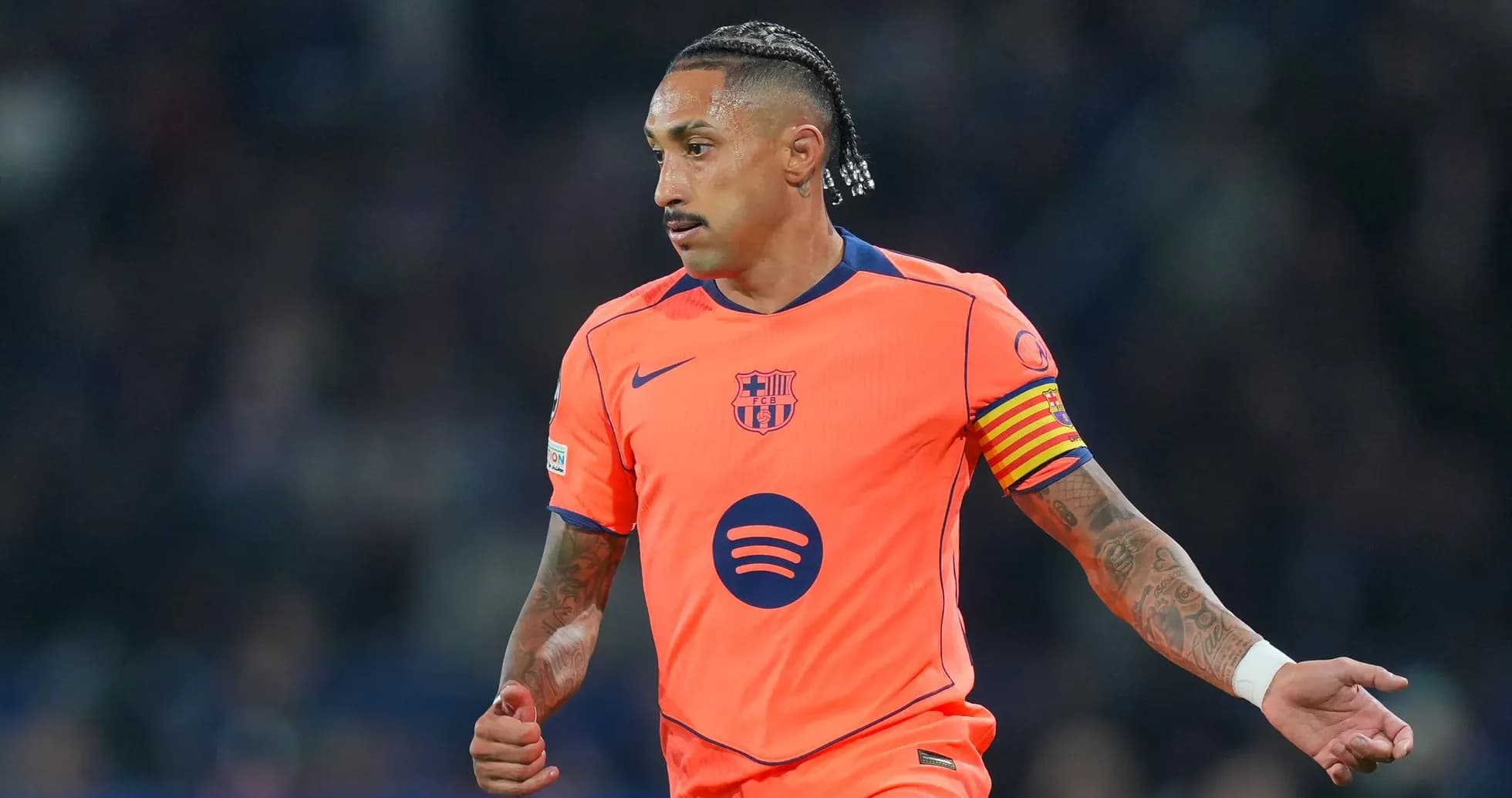
On Thursday, at CBF headquarters in Rio de Janeiro, the Brazil coach confirmed that the 29-year-old winger will board the long-haul flight to Singapore for two friendlies against Japan and the hosts. It is a decision loaded with tension.
Raphinha has only just returned from a muscular injury picked up during the last international break in Australia. The upcoming journey will cover close to 22,000 kilometres there and back. At Barcelona, alarm bells are ringing.
Laporta has already gone public with his frustration over what he sees as an unforgiving international calendar that punishes clubs and stretches players to breaking point. Barcelona, fighting on multiple fronts and wary of their winger’s fitness, wanted caution.
Ancelotti listened. Then he drew a line.
“We maintain good relations with Brazilian clubs and with European clubs, with whom we share information about the players. In general, this relationship is good,” he said, quoted by SPORT, making it clear that dialogue exists — but that the final word is his.
The message was unmistakable: consultation, yes. Veto power, no.
National team above all
When the questions turned to pressure from European directors, Ancelotti’s tone hardened. He is in charge of a Brazil side still carrying scars from recent tournaments, tasked with reshaping a squad that has fallen short of its own towering standards. Every FIFA window, in his eyes, is non-negotiable.
He stressed that during official international dates, the national team’s needs will override club concerns. The Selecao’s rebuild, he believes, cannot be run on someone else’s timetable.
“We have no particular requests, nor do we need them. In the FIFA dates, we will call the players that we consider important for the Brazilian national team,” he said.
There was nuance, but it was selective. Ancelotti has shown a degree of flexibility with domestic sides like Flamengo and Palmeiras, both locked in a fierce title race in Brazil. He chose not to call anyone from those clubs and limited his picks to one player per Brazilian team.
“This is a sensitive moment, that's why we've only called up one player per team and decided not to bring anyone from Flamengo or Palmeiras because they are fighting for the title.”
European giants, though, receive no such protection. The core of his Brazil — the “spine” — will be present whenever possible. And Raphinha, even with his recent injury history, is firmly in that group.
A new cycle, with old pillars
Raphinha’s selection is not an isolated call; it is part of a broader blueprint. Ancelotti is trying to thread a difficult needle: inject youth, keep authority. Hand opportunities to the next generation, but surround them with players who already know the weight of the yellow shirt.
“We have started a renewal project and now is the ideal time to do it. In September, we started evaluating younger players and now we continue doing so with these players who can be the future of the Selecao,” he explained. “We have made a balanced call-up, but in which there are nine players of Olympic age and up to fifteen under 23 years old.”
The numbers tell the story. Fifteen players under 23. Nine of them of Olympic age. This is not a token gesture to youth; it is a structural shift.
Yet Ancelotti has deliberately anchored that youth movement to five veterans who survived the last World Cup and will, in his mind, carry Brazil into the next one and the upcoming Copa America.
“We've chosen five players who were at the last World Cup and who will be important for this new cycle in which we'll compete in the Copa America and another World Cup. These players are Marquinhos, Gabriel Magalhaes, Bruno Guimaraes, Vinícius Junior, and Raphinha.”
Raphinha, then, is not just another winger on the list. He is one of the five pillars of the project. That status goes a long way to explaining why Laporta’s protests never stood a chance.
Raphinha’s evolving role
The debate is not only about kilometres and muscle fatigue. It is also about what kind of player Raphinha is becoming.
Under Hansi Flick at Barcelona, the Brazilian has been pushed into unfamiliar territory. No longer simply a touchline winger, he has often been used as a central striker, a roaming number nine who drifts, presses, and attacks spaces rather than hugging the flank.
It is a tactical tweak that could easily tempt a national coach looking for solutions in the final third. Yet Ancelotti refused to reveal whether he plans to mirror Barcelona’s experiment during the friendlies in Singapore.
“We have versatile forwards who can occupy various positions. I focus on what we can do and not on the quality of our opponents. We will continue playing with three midfielders and three forwards,” he said, keeping his cards close.
The hint is there, though. Versatile forwards. Three up front. A coach who values flexibility as much as structure. Raphinha, capable of playing wide or inside, fits that profile perfectly.
Club versus country, again
So the old fault line opens once more. A European superclub, wary of fatigue and injury, pushing back. A national team coach, under pressure to restore a fallen giant, refusing to compromise on his key men.
Laporta may rail against the calendar. Barcelona may fret over the 22,000-kilometre journey. But as long as Carlo Ancelotti is in charge of Brazil, and as long as Raphinha remains one of his chosen five, the winger’s boarding pass for international duty looks almost guaranteed.
The real question now is not whether Raphinha travels. It is whether this Brazil, rebuilt on a young core and a hardened spine, can justify every one of these battles when the next trophies are on the line.