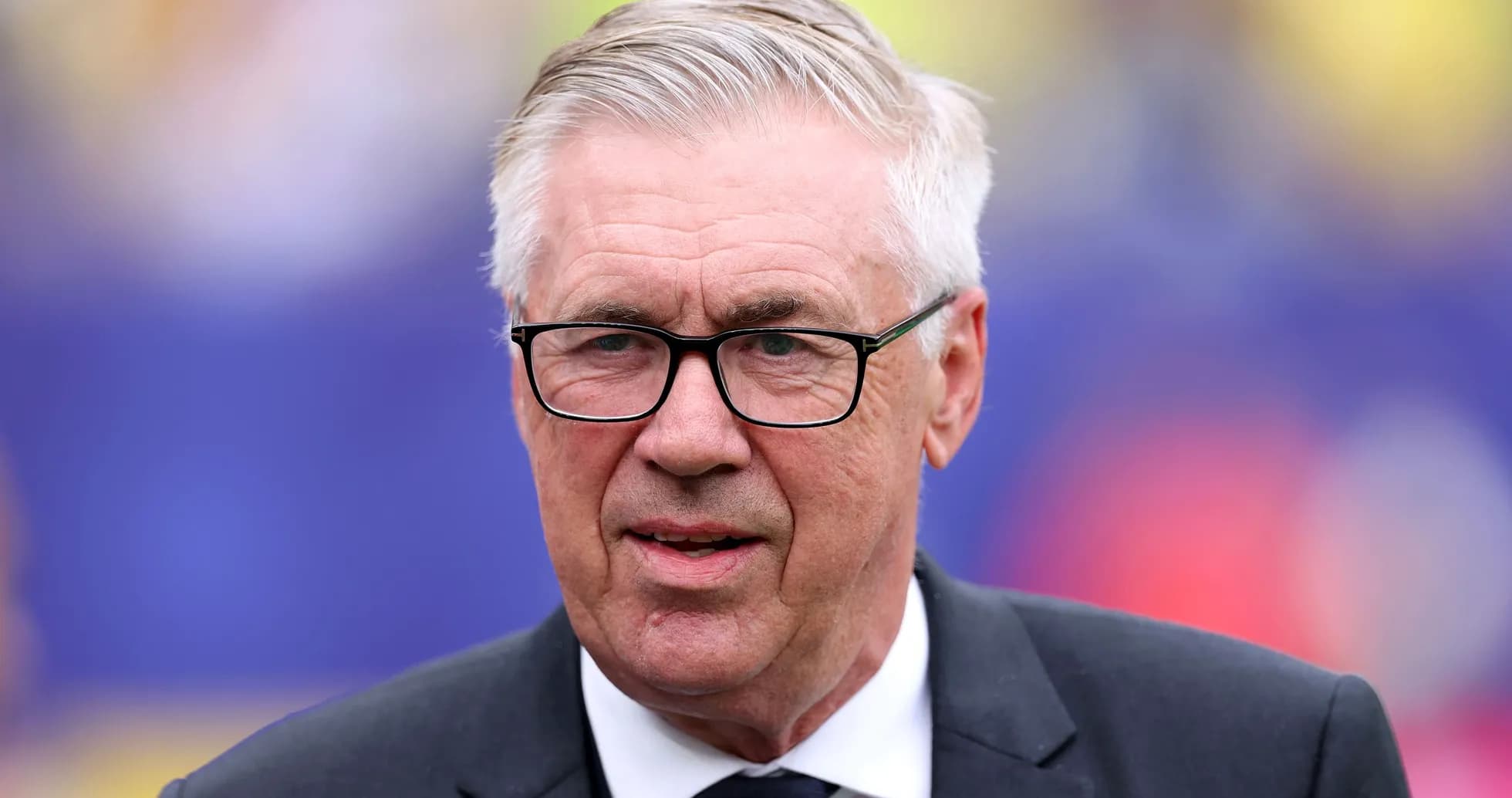
Carlo Ancelotti's Bold Brazil Reset for a New Generation
Carlo Ancelotti did not just tweak Brazil after their World Cup collapse. He tore the blueprint up and started again.
The Italian has unveiled a strikingly young squad for friendlies against Australia and India, making good on a promise he delivered in the raw aftermath of that shock round-of-16 exit to Norway. This is not a gentle evolution. It is a reset.
Alisson out, Neymar gone, hierarchy shaken
The first thing that jumps off the page is who is not there.
Liverpool’s Alisson, long considered untouchable between the posts, has been dropped. So too have veteran midfield anchors Casemiro and Fabinho, mainstays of Brazil’s spine for the best part of a decade. Neymar, of course, is absent after his recent international retirement, a void that still feels more emotional than tactical.
Ancelotti has not ducked the symbolism of those decisions. He has embraced it.
“The World Cup was a disappointment for us and for me personally,” he admitted, speaking to ESPN. “The pain of the defeat lingers much longer. Now, however, we are motivated by the fact that we have time to prepare for a new cycle and get ready for the upcoming competitions.”
This is that new cycle, laid bare in squad form.
Olympic age, World Cup target
Look closely at the profile of the players called up and a clear strategy emerges. Ancelotti has specifically targeted footballers eligible for the 2028 Olympic Games, effectively using the next four years as a runway to the 2030 World Cup.
It is a long game, and a bold one. Brazil is a country that rarely tolerates long games.
Yet the coach is unapologetic about prioritising youth, even when it means sidelining one of the world’s best goalkeepers.
“We know Alisson very well, and when the competitions, like the Copa America, come, if he remains being the best goalkeeper in Brazil, Alisson will play,” Ancelotti said. “Right now, however, we have to prioritise the younger ones.”
That one line captures the entire project. Respect for the old guard. Space for the new.
New faces, old standards
The goalkeeping department, once Alisson’s private territory, now belongs to Hugo Souza, Pedro Morisco and Otavio. None carries his pedigree, but that is not the point. Ancelotti wants them hardened by experience before the stakes rise again.
Ahead of them, the defence blends raw potential with familiar authority. Marquinhos remains the reference point, flanked by the likes of Gabriel Magalhaes, Arthur Dias, Wesley, Douglas Santos, Jair, Matheuzinho, Maurio Junior and Vitor Reis. It is a list that speaks to depth rather than celebrity.
Midfield tells a similar story. Bruno Guimaraes, now of Arsenal, is entrusted as a leader in the engine room, alongside Andrey Santos, Danilo Santos, Douglas Luiz, Breno Bidon and Gabriel Bontempo. There is energy, running power, and a clear attempt to modernise the tempo of Brazil’s play.
Up front, the future is already knocking. Endrick, the teenage phenomenon, is joined by Joao Pedro, Estevao, Pedro, Raphinha, Rayan, Samuel Lino and Vinicius Junior. It is Vinicius and Raphinha who will be asked to carry the attacking standard, but the message to the rest is unmistakable: this is your time to grow into the shirt.
Leaders kept, not clung to
For all the ruthless cuts, Ancelotti has not emptied the dressing room of experience. He has chosen his senior lieutenants carefully.
Vinicius Junior and Raphinha will spearhead the front line with Joao Pedro, who returns after missing the World Cup. Marquinhos and Bruno Guimaraes are retained to guide a group that will be learning international football on the job.
“I chose these players to help with this change in direction,” Ancelotti explained. “They are crucial for the future and will help the younger players improve. One thing is certain: a player who is 34 or 35 years old isn’t the future; they are the present. If a player of that age is ready to play in a major tournament, they will be in the national squad.”
The door is not closed to the veterans. But it is no longer propped open out of habit.
Australia, then history in India
The first test of this new-look Brazil will not come in a major tournament or a fierce South American qualifier. It will come in Townsville.
The Selecao face Australia’s Socceroos on September 25, then meet them again four days later in Brisbane. On paper, these are friendlies. For many of these players, they are auditions.
Then comes something entirely different. On October 3, Brazil will play in India for the first time, travelling to Kolkata for what is set to be a landmark occasion. For a country where Brazil shirts and yellow flags flood the streets every World Cup, the five-time world champions finally arriving in person is more than a novelty; it is an event.
For Ancelotti, it is also another laboratory. Another chance to see who can handle the weight of the shirt, the travel, the expectation.
From pain to plan
The sting of that defeat to Norway has not faded for Ancelotti. He has said as much. International failure, he admitted, lingers in a way club setbacks do not.
The response, though, is unmistakably that of a coach who has seen too much of this game to cling to the past. He is betting that the next Brazil will not be built on reputation, but on readiness.
The names have changed. The ambition has not.